
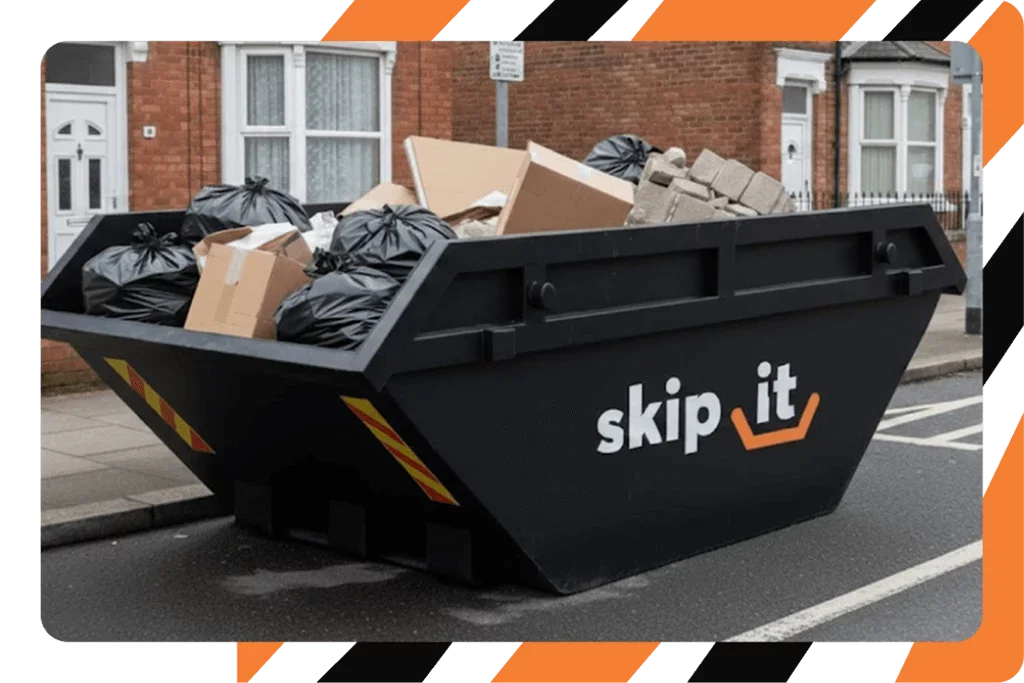
Most household, garden, and building waste can go in a skip, but not everything. If you are planning a clear-out and wondering “What can you put in a skip in Epsom?” the answer depends on UK waste rules. Furniture, rubble, soil, and garden cuttings are fine to load; however, items such as chemicals, batteries, gas canisters, and asbestos are strictly prohibited due to fire and environmental hazards. Getting this right is important because incorrect waste in your skip may lead to rejected waste collection, additional charges, or even fines later in the process.
From a house clean-out to a garden tidy-up or a complete home renovation project, this guide covers exactly what’s allowed, what isn’t and how to get the most out of your skip space.
What can you put in a skip in Epsom?
Household and garden waste, broken household furniture, garden waste, and building materials such as bricks and rubble can all go directly into a skip, as long as they are not hazardous. Skip hire in Epsom is designed to handle exactly this kind of everyday clearance, whether it is clearing out your loft, refitting your kitchen, or overhauling your garden. Mini skip hire in Epsom is ideal for smaller works, while builders skip hire in Epsom is ideal for larger renovations.
The golden rule is simple: if it’s solid, non-toxic, and not a hazardous waste, it’s usually fine. Anything liquid, flammable, or classed as hazardous needs a different disposal route entirely.
Common household and garden waste you can dispose of
While each load is different, there are certain rules for what items are allowed in a skip:
-
Accepted Household items
Furniture, carpets, general waste, cardboard, paper, glass, and old appliances can be collected. You can also use rubbish skip hire services for bathroom fitments, kitchen units, old appliances, and old flooring.
-
Garden waste
Grass cuttings, hedge trimmings, branches, soil, turf and leaves are all accepted. Garden waste skip hire is therefore a simple solution for disposing of a lot of green waste in a single skip.
-
Construction materials
Materials like bricks, concrete, tarmac, rubble, metal and wood offcuts can be put into most skips. Items such as concrete and soil fill skips quickly, so verify skip sizes in Epsom before loading.
What items are not allowed in a skip?
There are some types of waste that are prohibited under skip waste rules UK. Those are:
-
Hazardous and chemical waste
Paints, solvents, oils, petrol, diesel, and other liquid wastes are not allowed in a skip. These must be disposed of at a licensed hazardous waste site, not at a general waste disposal site.
-
Appliances and electrical items
It’s illegal to throw appliances such as televisions, gas cookers, and electrical items into a skip. They are meant for responsible recycling.
-
Asbestos and medical waste
Asbestos, medical waste, and fluorescent tubes require special handling and cannot be thrown in a skip.
-
Fuel, gas, and tyres
Animal products, gas canisters, and car tires are also excluded from standard skips, so check with your provider first.
How to load your skip safely and maximise space
Loading a skip properly affects safety, cost, and how much waste actually fits.
Start by breaking down bulky items like flat-pack furniture and cardboard boxes first, as this frees up enough space to avoid needing a second skip. Load heavy items such as bricks, soil, and rubble at the bottom, followed by lighter, bulkier waste on top, to keep the skip stable.
Never overfill past the fill line, since waste piled above it isn’t legal to transport on public roads. Keep plasterboard separate too, as it reacts badly with other waste in landfill, so it’s usually restricted to around 10% of a load and bagged separately.
Why do skip waste regulations matter in Epsom
The skip hire regulations Epsom are made for the protection of the people handling waste and the environment it ends up in.
Lithium batteries and other banned materials have been responsible for serious fires in waste collection vehicles and sites throughout the UK, so not placing them in skips will keep the drivers and site workers safe. Furthermore, hazardous materials and chemicals can also contaminate soil and water if they end up in your general waste.
Council can also fine for illegal waste disposal, so following skip waste rules UK helps to keep your project on schedule.
Conclusion
Awareness of what can and cannot be put in a skip will save time, reduce unnecessary expenses, and keep your waste management hassle-free from delivery to collection. Whether it’s a garden, a kitchen, or even a complete home declutter, it is important to know the right skip size and how to load it safely for safe transportation. Following the list of permitted items also means quicker collection and one less thing to worry about on a hectic project.
Contact Skip It London , a reliable skip hire service provider with years of local expertise and genuine expert advice for a skip hire quote and accurate skip size for your job.
FAQs about what can go in a skip
You must not exceed the skip’s wall height when filling. If it is overfilled, you may be fined. It can also be dangerous while transporting.




 WhatsApp for an Instant Quote